
 American medical scientists win more Nobel Prizes than any other nation. Why then is our national healthcare system rated 27th in the World?
More European and Asian parents send their college-aged and post-graduate children to American universities than to any other nation – by far. Why then is our national education system rated 24th in the World?
The answers to both questions are the same: we do a very poor job of teaching teachers how to teach and have failed teaching doctors and their staffs how to understand the human needs and feelings of patients.
Poor teaching in Schools of Education has been significantly documented by independent education groups – even Randi Weingarten has signed off on one major study… though she never mentions it.
Today middle school children are no better in math and English than they were during Covid — when most schools were closed.
Teaching doctors how to go beyond understanding symptoms to an understanding of the people having them, has taken a very long time, has never been examined by third parties in the same way as the education of teachers, and doesn’t matter because our healthcare system overwhelms those working in it making new knowledge worthless.
Anyone having a serious health problem has experienced one or more examples of frustration because while the focus is understandably on discovering the reasons for trouble, they often feel ignored as individuals and see a dependence on pharmaceuticals, physician’s concerns about liability and the need to make money as the answers to everything.
Our terrible international ratings in education and healthcare are deserved – but can be very much improved if we stop doing what we are doing in the training of these incredibly important professionals…and do something different now…right now.
FIXING EDUCATION
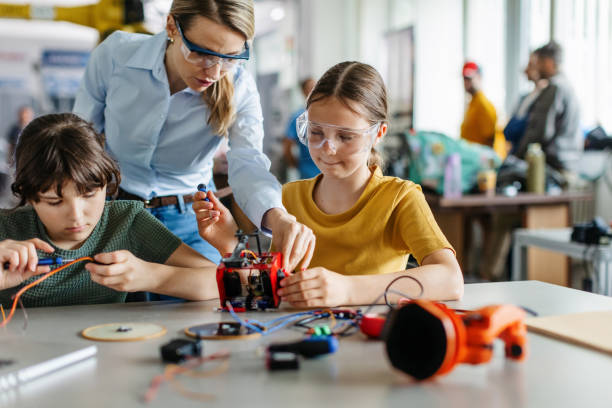 We have focused on this problem again and again over the years. We know now that little has been done to change how Schools of Education fail those wanting to teach and how our government on all levels cannot improve what exists and no longer bothers to even discuss the issue.
There used to be a concentration on change that promised much but delivered little. Now instead of strengthening elementary and middle school there is the desire to offer school to an increasingly younger child. Because early childhood education requires trained personnel and a very specific order of focus – one teacher to every four children – what we see is little more than professional baby-sitting – when or if – we bother to examine it.
We learn how a tiny nation like Finland – about the same size as Minnesota – provides free pre-school learning with highly trained teachers – to those youngsters from three to six years old – knowing that formal schooling begins in Finland at 7 years old.
Yet their approach, where teachers have degreed training and are assigned to no more than four children at a time, has taught reading and math so well that by the time they are 15 years old, most Finnish students outperform almost all nations in reading and math.
We can provide proof from a definitive study that Schools of Education are failing but see no reason to bother. The very latest study shows that middle school students are doing no better now in reading and math than they were during Covid where schools were essentially closed.
Are we ever going to fix the failures of public education? We are in a new political season with midterms coming in just a few months. Notice how many times improving education is mentioned by anyone running for any office. Count them on your fingers. You will have plenty of fingers “left”.
We can fix education. We simply don’t want to bother.
Our medical scientists do impress. Our healthcare system is ranked 27th in the industrial world. That is not a mistake.
Studies have long shown that the pharmaceutical industry, with the largest lobby in Washington, controls the way we provide healthcare in America.
Doctors are the entryway to customers for the industry and doctors are treated royally by BIG PHARMA.
 But none of that is of interest to the medical insurance business and increasingly Medicare and other insurance coverage has been less than responsive to physicians. Study a monthly report from Medicare and you quickly see that what a physician charges for a service and what Medicare pays for it are very, very different things. That kind of diminished payment to physicians has caused them to no longer be assured of the income physicians expect to receive for the work they do. Apparently, physicians believe that those days are gone forever.
And so, we see the rise of Concierge Medicine where a patient is asked for a large annual payment before ever seeing that doctor…and in return, is promised unlimited availability to the doctor and to his knowledge base and experience.
Once upon a time the education of physicians did not include much beyond the search for and understanding of the raw biomedical science that caused the symptoms that patient’s revealed.
Physicians did not even learn enough about nutrition to help a patient deal with certain problems stemming from a lack of nutritional intake. While the technical needs of doctors improved considerably, it didn’t seem that doctors could go beyond symptoms to deal with the human side of being sick.
Today medical school curricula explicitly contains very detailed information and training regarding patient feelings, perspectives and emotional needs. Modern attempts at training require a formal education in patient-centered communication, empathy and behavioral sciences.
The range of this training can be impressive: actors brought into to simulate patients concerns, medical students themselves pretending to be patients, the integration of literature, creative writing and patient storytelling…all of this to consider the “living experience” of someone in need of a physician’s help -rather than just viewing symptoms.
And yet this kind of medical training has found and documented a phenomenon known as “empathy decline”. As students transfer from classroom and lab learning into busy hospitals for clinical rotations an unwritten social structure takes over so that heavy administrative efforts become a burden and compress schedules. Instead of listening, doctors depend on case files or even room numbers to maximize their efficiency and burned-out residents begin using emotional detachment as a coping mechanism which they take with them when going into private practice.
AGEISM
And nowhere is that loss of understanding patients as human beings more profound than in the reality of “ageism”.
 Ageism is the most powerful and destructive drivers of the curriculum devoted to teaching doctors to see patients as people not just symptoms. It directly causes physicians to abandon the empathetic patient- centered communication models they have been taught and derail a doctor’s ability to recognize, validate and respond to all emotional and physical needs.
Doctors face elderly patients who have complex, chronic conditions and refer to them as “gomers” or “trainwrecks”.
What a doctor may see as an acute trauma in a 25 year old and find an exciting challenge, they see in a 90 year old as an administrative ordeal or a frustration often blaming symptoms on “old age” and essentially “unfixable”.
With elderly patients, serious conditions such as clinical depression, severe vitamin deficiencies and localized infections are frequently overlooked as the doctor assumes unavoidable senility or just “old age”.
The cost of this attitude drives an estimated $63 billion dollars annually in excessive healthcare spending. One out of every seven dollars spent on America’s eight most expensive health conditions is directly caused by ageist bias, stereotypes and outright discrimination.
If that is not serious enough there is this: the actual cost goes beyond $63 billion because researchers mathematically removed overlapping costs to ensure a more conservative final estimate.
The financial cost of these ageist attitudes is massive but the biological impact is actual survival. Economists note that even a 10% reduction in societal ageism would prevent 1.7 million cases of severe illness each year saving the society billions.
Is it any wonder that our healthcare system is rated at 27th in the World?
LOOKING AND SEEING
Sometimes it seems that everywhere we look we see decline and disappointment. For those who have lived a long time there is wonderment: what has happened to the America we grew up in? Where did it go…how did it happen?
Progress good or bad has always meant change. In politics, we see an independent private foundation help a President ignore Congress daily – and get away with it for all intents and purposes…at least for a little while.
In science, we develop AI and then fear that this new approach to the accumulation of knowledge will become our Masters and not our super assistants in so many areas of life where we can suddenly acquire knowledge with a touch of a computer key and what a difference that can make.
But there are realities: the failure to educate our children since the 1970’s and the monetarization and resulting deterioration of healthcare are areas we can change if there is a desire to do so.
Again and again the same question arises: Are we the America who cares enough and is smart enough to try?
We leave the answer to you.