For the very first time in years the name of John F. Kennedy is back in the news – even if it is news from the world of entertainment not politics and is about his son JFK, Jr. and his marriage to Carolyn Bessette as told in Love Story, a brief TV series created by the very master of them, Ryan Murphy.
Mr. Murphy and his colleagues have used a biography of Carolyn Bessette, the Calvin Klein fashion employee who married the 40 year old “John John” – a man who was all the rage as the heir apparent, very aware of his status and good looks as he became a man about town, not in the Kennedy world of Boston, but in New York City.
The series is the talk of New York’s millennials – even if they know little or nothing about President John F. Kennedy beyond the fact that he was assassinated. They know nothing about his career or how he became a candidate for President of the United States – and the eventual winner of the election for President in 1960.
America’s dismal teaching of its history in elementary and secondary schools never really gets that far. Unless you major in history in college and became a graduate student in history you cannot fully grasp the very nature and heart of this country… or truly understand the twists and turns of its government. America’s present dis-ease with itself is a strong example of these intellectual failures.
JFK ran against former Vice President Richard Nixon in the first Presidential election to feature a nationally televised Presidential debate – which Kennedy seemed to win over a sweaty and nervous opponent. The election was very close – so close that news stories indicated that the only reason Kennedy won was because Mayor Richard Daley of Chicago and his minions in Illinois voted the names of dead people to provide his winning margin.
What no one has ever heard is how JFK became the nominee of the Democratic Party rather than two better known and influential US Senators, Estes Kefauver of Tennessee and Hubert H. Humphrey of Minnesota.
This is that story.
LOGAN, WEST VIRGINIA
Before arriving in Charleston, West Virginia by train from Penn Station in New York, he had secretly studied to become a radio announcer while at Brooklyn Law studying to become a lawyer.
Blessed with loving parents who thought their only son should become a dentist (not a doctor because they made house calls, worked hard and died early) despite his outspoken protest against the idea. His only escape from that career was failing chemistry in his Junior year at Brooklyn College and agreeing to go to law school. Since he had joined the Liberal Party while at college, law school seemed a decent choice.
He had begun seeking employment as a radio announcer by sending a very carefully designed tape recording of his voice to stations advertising for announcers and took the first job offered in a tiny Southern town deep in distinctly segregated Louisiana. After four interesting months learning the radio game and being treated royally by citizens who earnestly wanted to tell a Brooklyn boy why desegregating schools was bad for all concerned – he moved on to the next radio job in Logan, West Virginia.
During WWII Logan was the soft coal capital of the World. Those West Virginia mountains were full of the soft coal that produced the energy that drove the American war effort against enemies in Europe and Asia.
By the time he arrived in Logan after a terrible, sickening two hour bus ride from Charleston over one twisty mountain road after another – he believed that the basic realities of West Virginia was a place where time had stood still.
The truth was that time had not stood still. The mechanization of coal mining had dropped the size of the population in Logan and Logan County to half of what it was during the money-earning war years…now 4,700 hundred people living in the city, 60,172 people living in Logan County.
Still those numbers made Logan the third largest area in West Virginia after Charleston and Huntington.
He had signed up as a morning man – opening the station at 4:30 am to read the farm reports, accident news and report the weather forecast in between lively, wakeup country music to get people going with their breakfast, work and school.
It was very much the same work as in Louisiana and would have remained that way until one day about two months into the job there was a disaster which changed everything.
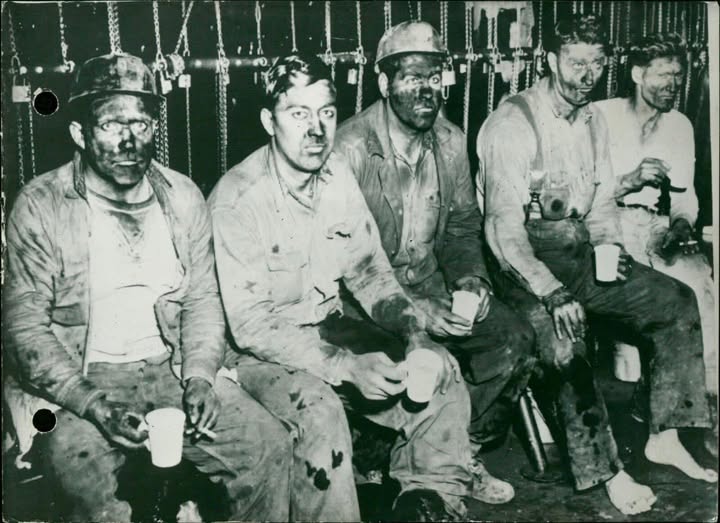 There was a massive explosion in the closest coal mine to the city…18 men had become trapped below ground by a wall of coal and mountainous boulders in a newly opened section of the mine.
This was 1959 and coal mining was still West Virginia’s singular industry and principal employer so mine disasters were feared at all times. Miners were like policemen in big cities: you never knew if they’d come home safely when they went to work.
The radio station’s coverage of the disaster was critical and he was assigned to do that coverage by the station manager who drove him to the site – about twenty minutes away from the station.
This was not the age of cellphones. And so for three long days he stood all alone on the edge of the mine property in a solitary phone booth (remember those? ) literally a five minute run from the entrance to the mine.
That first day he spent hours on the air with nothing around him but trees and a dirt road – bringing news of what was going on to an audience throughout the area. He took breaks to run into a building set up for newsmen from all across the State and far beyond. The disaster had attracted national attention.
The days seemed endless. There was no news other than the mine’s non-stop effort to get through the wall of coal and mountainous rocks that separated the trapped men from the rest of the world.
On the third day, the breakthrough was made. The men were found huddled together – and dead.
Mistakes down below in that mine shaft had been made and the explosion was caused by one of them but nobody survived and that was the news that hurt so much.
His coverage of the disaster opened the door to his participation in the community. He began to broadcast sports in a State which loved them all dearly. Little League baseball and Junior HS football for the youngest children, all the high school sports that mattered – football, baseball, basketball.
The station initiated after-school dances for the high school kids at the only movie theater in town. He hosted them and got to know the theater’s manager very well. He no longer had to pay when he went to the movies.
And all of this as an introduction to what became the biggest news in years in West Virginia – the Presidential primary election in 1960 with the country’s eyes on West (By God) Virginia.
A CATHOLIC PRESIDENT
America had never elected a catholic President.
West Virginia was the most southern Baptist State not located in the South.
Every Sunday morning from 6 am to 1 pm, the radio station broadcast six hours of church services. Each hour had been sold to a different Baptist Minister and his congregation to hold services in the station’s 200 seat auditorium.
Every Wednesday at noon, the station sponsored a Baptist preacher from a nearby community church who spoke for 15 minutes. Once a coal miner who actually dug 16 tons of coal, the Reverend Joe Pizzino would become a lifelong friend of his for 54 years before his death.
Pizzino spent time showing him the country side he would never have seen otherwise and introduced him to hundreds of Baptist preachers.
Each and every one of them had one opinion about a catholic President: he would take orders from the Pope in Rome.
At first he thought they couldn’t be serious but they were very serious and insistent. A catholic President was a very bad idea. They preached about that continuously.
The men and women running the primary campaign for Senator Kennedy knew all about those attitudes and focused the early months of 1959 on bringing the entire large Kennedy family to West Virginia to convince the citizens that they had nothing to fear.
If JFK could win the Democratic primary in West Virginia, he could become the President of the United States.
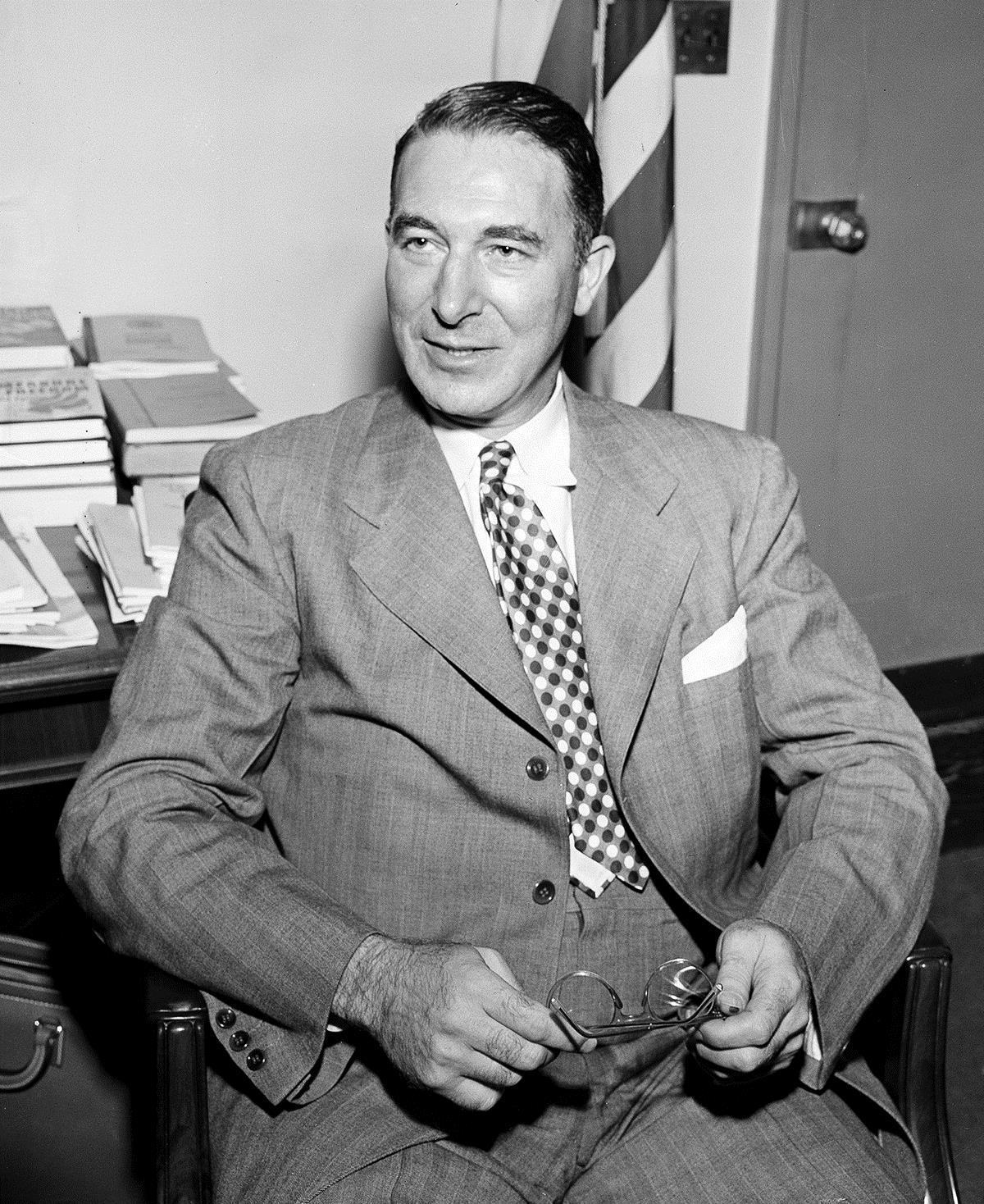
Kefauver had become involved in investigating organized crime’s impact on America in 1949 as he held open televised hearings for the next several years. By 1951 he was considered among the ten most admired men in America. His hearings across the U.S. revealed the exact nature and impact of crime’s involvement all across the country.
Kefauver was the candidate for Vice President in 1956 as part of the Adlai Stevenson effort to unseat Eisenhower and Nixon.
Hubert H Humphrey, the happy warrior, was known for his extraordinary policy expertise, his support of independent labor unions and his very strong liberal ideals.
And yet the idea that a young catholic Senator from Boston, Mass was going to make the effort to prove that a Catholic could be an American President caught the attention of the media and the nation. His focus on campaigning heavily in Baptist West Virginia made the point.
THE PRIMARY CAMPAIGN
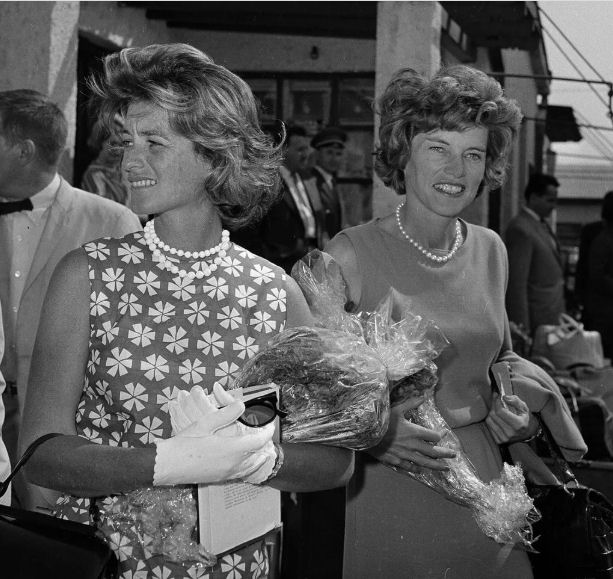
Several weeks later, Logan played host to JFK’s sister-in-law, Ethel Kennedy who arrived with his brother Teddy Kennedy. Several weeks later, Robert Kennedy came to town and several weeks after that Franklin Delano Roosevelt, Jr. FDR’s oldest son came to Logan.
All of the Kennedy’s appeared everywhere they could…stories in the only newspaper, interviews on both radio stations, public meetings…they were everywhere. It was a blitz.
He didn’t bother trying to meet any of the Kennedy’s…he was not a fan believing that JFK’s votes in the Senate were not based on beliefs but on what he thought was prevailing public opinion. His Father, a rich and powerful businessman with strong relationships in Hollywood, had chosen him to be America’s President when he lost his oldest son Joe – a Navy pilot – in the last days of WWII.
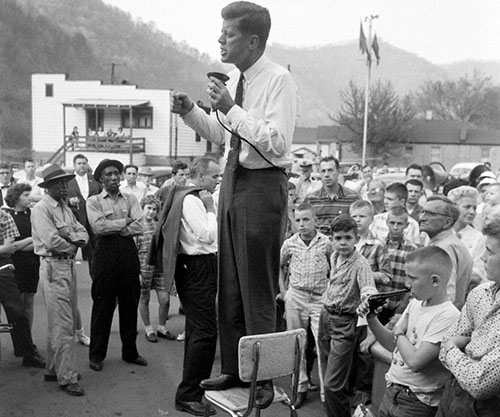
Kennedy spoke confidently and assuredly for about twenty minutes…his strong Boston accent prevailing. He answered about half a dozen questions and the formal meeting was over.
He had been standing in the back of the café but now made his way down front to where Kennedy was standing all alone. Kennedy looked tired, very thin and seemed sick. He had kidney disease and looked like he was suffering.
After introducing himself, he said “Senator that was a fine speech and I think you have impressed people – but don’t speak again in this restaurant because it is segregated.”
Kennedy, with his strabismus which made one eye look away as the other eye looked directly at you, literally shook himself, mumbled thanks, and moved quickly away and out the door to a waiting car.
When he got back to the radio station he was told that Sen Humphrey was due to come to Logan in three days and would be holding his meeting right at the radio station in its auditorium. He loved Humphrey and was delighted. He got a phone call later that day that would make that meeting very important.
BLACK BAGS
The call was from Anthony, the movie theater manager, who asked him to come up to his office he had something to show him.
He had been announcing the new movies coming into two for many months and thought the “something” was about that.
He had never been to Anthony’s office which was at the top of the movie theater itself. The only way to get to it was by climbing a long, very narrow, metal, opened staired staircase which made him uncomfortable, but he did it and pushed a heavy metal door open.
The office as a large square, with several desks and file cabinets.
Anthony was just getting off the phone, stood up to welcome him and simply said “Look”.
He didn’t know where to look until Anthony pointed to the floor or more specifically to the walls of the office and what was on the floor beneath: black leather bags a little larger than the black leather bags carried by doctors on their home visits.
Anthony stepped to the nearest wall, bent and opened a bag…He stepped forward to look inside and saw money…stacks of singles and fives filling the bags to the brim.
He asked if all the bags…there may been as many as fifty if not more…were full of money. Anthony nodded yes. “The Kennedy people left them here yesterday and said they’d pick them up the day before Primary Day.”
“Are they kidding?”
“Nobody is kidding.”
“What are you going to do?”
“Never mind what I’m going to do…what are you going to do?”
He stood there not uttering a word. Stunned.
What could he do? He understood immediately that Anthony thought he would announce that the Kennedy people had brought money to Logan to buy votes.
Would he dare to do that? How did they think they were going to reach voters coming into church rooms or school rooms or libraries to vote?
It would become an open secret that the Kennedy people were trying to literally buy the West Virginia vote to prove the point about the chances of a catholic becoming President in this southern Baptist haven.
He said “I don’t know” and left walking slowly down the side of the building…stunned and a little scared.

It was a kick for him to sit in the radio control room and introduce Humphrey to the station’s listeners and watch Humphrey standing on the other side on the glass separating the studio from the auditorium.
Every seat was full and Humphrey was in his element talking seriously, warmly about the needs of Appalachia and talking about the money needed, the commitment needed, the leadership needed.
Later Humphrey and his beloved wife Murial, stayed to meet those audience members who would stand in line to shake his hand.
He waited his turn on line and briefly told the Senator what he had seen. Humphrey looked at him silently, pursed his lips and said nothing…but turned suddenly to bring his wife over to meet this New York young man living and working in Logan.
And that was that.
Pundits said that Humphrey was only in West Virginia to take primary votes away from Kefauver who was considered the favorite.
And then it was Primary Day.
People in the city voted with a paper ballot, a pencil and put their paper vote into a slotted box. All of the voting in the city was done in local churches.
Nothing crazy seemed to be taking place.
But Anthony had said something about Logan County and the hillbillies who couldn’t read or write.
He told the station’s engineer he wanted to ride around the county to see how voting was going and could he borrow his car. The engineer said he was free and could drive him.
What he saw stunned him.
Tents set up in local football fields, in large parking lots and in parks and occasional shopping mall lots.
He continually saw uniformed Sheriff deputies and other law officers and their subordinates going in and out of voting booths with locals…helping them to vote because they needed help and had the right to ask for it under West Virginia election law. It was help designed to assist voters to make their “mark”, if they couldn’t sign in. It was not supposed to be about telling them who to vote for…or actually voting for them.
Now he knew how the Kennedy money was being spent.
When the votes were tallied across the State, JFK was the clear winner. He won in Charleston and in Morgantown, the home of West Virginia University. It was very close in cities like Huntington, Logan, Weirton and Bluefield but he lost them.
His winning margin came from county votes all across the State. He had proven that a catholic could be elected President of the United States.
No one…no book or magazine or documentary about JFK has ever mentioned how he had won the critically important Primary victory in West Virginia.
Maybe it wasn’t important. Maybe it was just another political story.